

.jpg)
We Don’t Need No Water
Medium:
Dimensions:
Style:
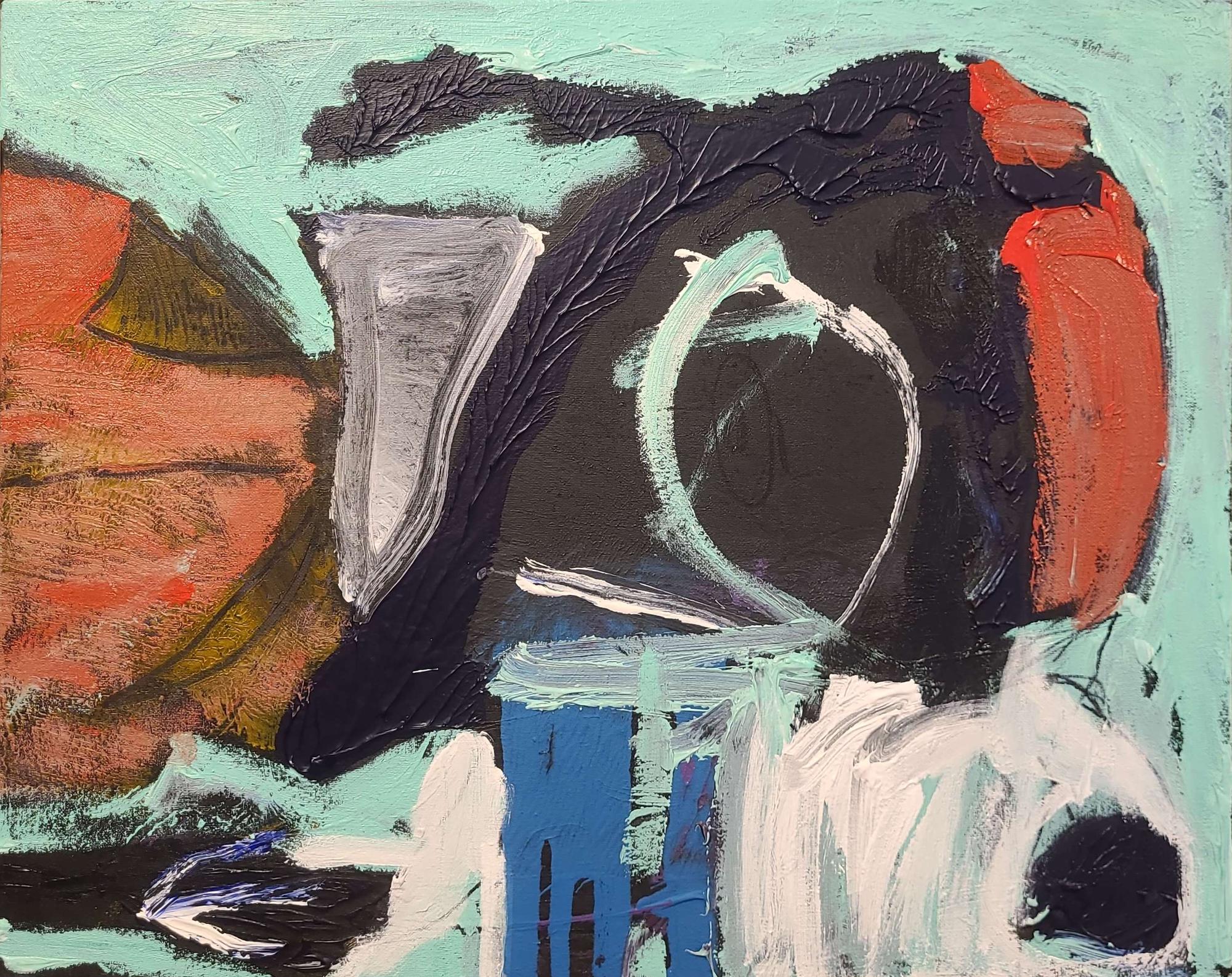
We Don’t Need No Water responds to the tension between fatigue and vitality through both subject and process. Two figures emerge from the canvas - one a clown whose painted tears/sweat suggest both comedy and collapse, the other a quieter companion. Aside from them, hands present a burning cake, an offering that flickers between celebration and destruction. The work was made under the constraints of chronic fatigue syndrome, where energy is scarce and each mark carries weight. Yet rather than framing fatigue as defeat, the painting treats it as a condition that shapes expression. Gestures are urgent and direct, colors vibrate between exhaustion and intensity, and the image balances on the edge of breakdown and renewal. The crying clown reflects this duality: a figure who performs while unraveling, who embodies both depletion and persistence. The other character is contemptuous and apathetic. The burning cake, at once festive and threatening, suggests vitality’s excess - an energy that risks consuming itself. Here, fatigue and vitality are not opposites but entangled states. The painting insists that vitality can be raw, imperfect, and fleeting - that the very act of painting, however strained, remains an affirmation of presence and expression.
Read more

We Don’t Need No Water responds to the tension between fatigue and vitality through both subject and process. Two figures emerge from the canvas - one a clown whose painted tears/sweat suggest both comedy and collapse, the other a quieter companion. Aside from them, hands present a burning cake, an offering that flickers between celebration and destruction. The work was made under the constraints of chronic fatigue syndrome, where energy is scarce and each mark carries weight. Yet rather than framing fatigue as defeat, the painting treats it as a condition that shapes expression. Gestures are urgent and direct, colors vibrate between exhaustion and intensity, and the image balances on the edge of breakdown and renewal. The crying clown reflects this duality: a figure who performs while unraveling, who embodies both depletion and persistence. The other character is contemptuous and apathetic. The burning cake, at once festive and threatening, suggests vitality’s excess - an energy that risks consuming itself. Here, fatigue and vitality are not opposites but entangled states. The painting insists that vitality can be raw, imperfect, and fleeting - that the very act of painting, however strained, remains an affirmation of presence and expression.